| | The 3rd International Conference on Computational Modeling and Applied Mathematics (CMAM 2026) Concludes Successfully in Harbin
| |
100+
SUBMISSION | 70+
PAPERS | 6
KEYNOTES | 8
ORAL TALKS |
On August 8, 2026, the 3rd International Conference on Computational Modeling and Applied Mathematics (CMAM 2026) drew to a successful close in Harbin, the "Summer Capital of Ice City." The conference was jointly organized by Harbin University of Science and Technology and Nanjing University, hosted by the School of Science of Harbin University of Science and Technology, and supported by the School of Automation of Harbin University of Science and Technology, the School of Science of Heilongjiang Institute of Technology, the School of Mathematical Sciences of Mudanjiang Normal University, the School of Science of Qiqihar University, the School of Computer and Mathematics of Harbin Financial University, the Heilongjiang Provincial Key Laboratory of Complex System Optimization Control and Intelligent Analysis, the Operations Research Society of Heilongjiang Province (in preparation), and the journal Information and Control. Against the backdrop of accelerating global technological revolution and industrial transformation, over a hundred experts and scholars from universities and research institutes across China gathered along the Songhua River to engage in in-depth exchanges on frontier directions including computational modeling, applied mathematics, operations research and optimization, numerical computation, and control theory, fostering interdisciplinary collaboration and synergistic innovation.
 |
| CONFERENCE SCENE · CMAM 2026 |
| | Opening Ceremony: A Gathering of Distinguished Minds | 1 |
The conference officially opened on the morning of August 8 in Lecture Hall 317, New Energy Building, Harbin University of Science and Technology. The opening ceremony was presided over by Prof. Hongxu Zhang, Chair of the Department of Mathematics, School of Science, Harbin University of Science and Technology, who extended a warm welcome on behalf of the organizing committee to all attendees, both on-site and online.

|
| OPENING CEREMONY |
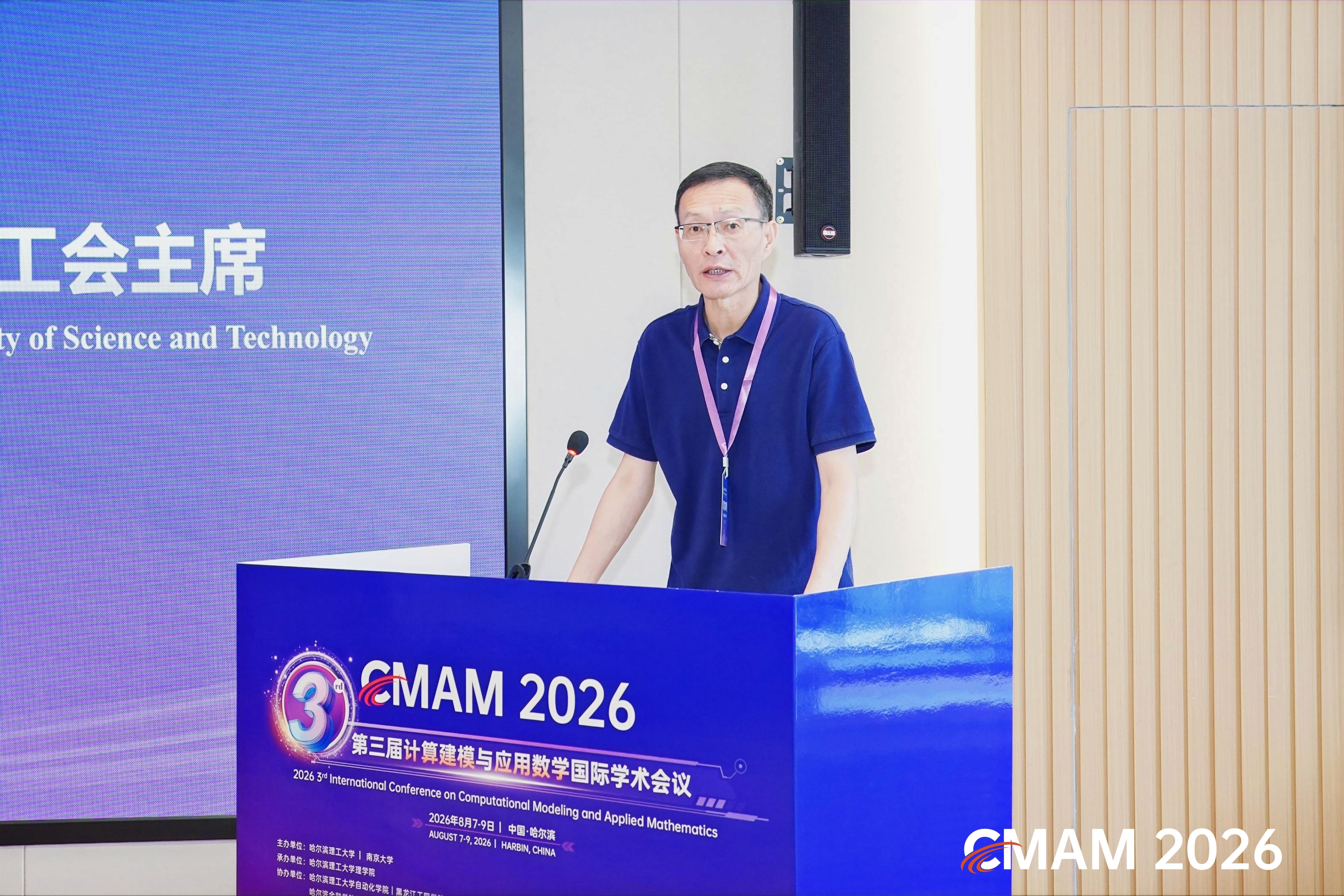
Secretary Jiali Guo, Deputy Secretary of the Party Committee of Harbin University of Science and Technology, delivered the opening address. In his speech, Secretary Guo extended a warm welcome to the visiting experts and scholars and expressed sincere gratitude to the co-organizer Nanjing University and all host and supporting institutions. He introduced the historical evolution, disciplinary layout, and research achievements of Harbin University of Science and Technology. He noted that computational modeling and applied mathematics serve as the cornerstones of modern scientific and technological innovation, playing an irreplaceable role in frontier fields such as artificial intelligence, quantum computing, control engineering, and image processing. He expressed his hope that the scholarly exchanges would generate new academic inspirations and jointly promote interdisciplinary collaboration and innovation.
|
| OPENING ADDRESS · SECRETARY GUO |
Subsequently, Prof. Hui Bi, Dean of the School of Science, Harbin University of Science and Technology, and Conference Chair, delivered a speech. Prof. Bi expressed heartfelt gratitude to all experts and scholars for their long-term care and support for the development of the School of Science, and briefly introduced its disciplinary construction and research outcomes. She reported that the conference received over 100 submissions and accepted more than 70 papers, covering topics in computational modeling, applied mathematics, operations research and optimization, numerical computation, and control theory. She hoped that the conference would provide a high-quality academic platform for deep exchanges and intellectual collisions among domestic and international scholars, thereby advancing theoretical innovation and interdisciplinary integration.

|
| CONFERENCE CHAIR · PROF. HUI BI |
| | Keynote Speeches: Cutting-Edge Perspectives and Brilliant Presentations | 2 |
Following the opening ceremony, the keynote session commenced. Four keynote speeches were delivered in the morning and two in the afternoon, moderated respectively by Prof. Hui Bi (School of Science, Harbin University of Science and Technology), Prof. Kewei Zhang (School of Science, Heilongjiang Institute of Technology), Prof. Guizhi Meng (Associate Dean, School of Science, Harbin University of Science and Technology), Prof. Boying Wu (Harbin Institute of Technology), Prof. Fengmin Wu (Associate Dean, School of Science, Harbin University of Science and Technology), and Prof. Fengyu Fu.
| First Keynote Speaker: Prof. Wanyang Dai (Nanjing University) |
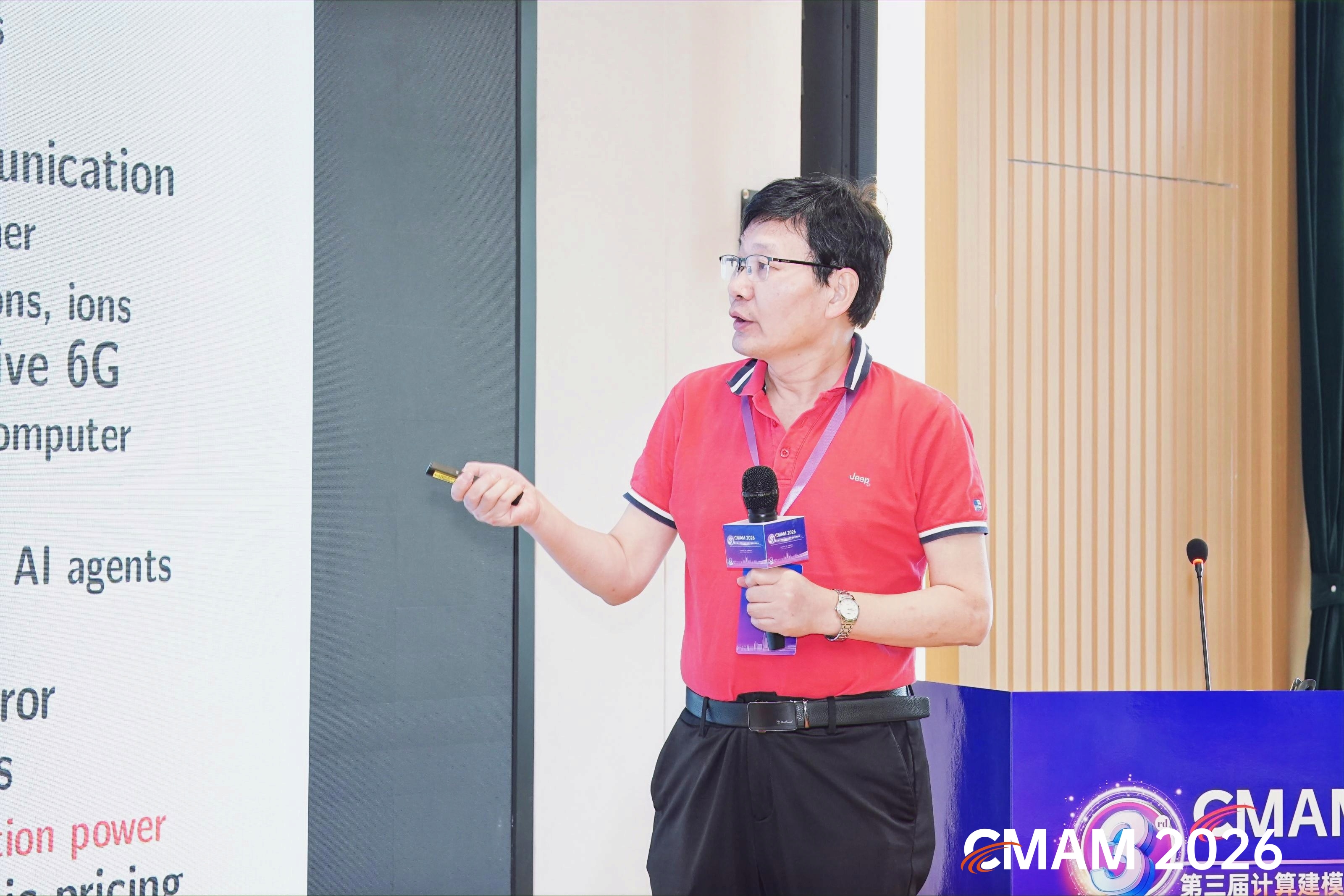
Prof. Wanyang Dai is a Professor and Doctoral Supervisor at Nanjing University, Chief Scientist of Su Carbon Control Technology, Chairman and CEO of the International SIR Forum, and Director of the Jiangsu Provincial Committee on Big Data-Blockchain and Intelligent Information. He delivered a talk entitled "Spatiotemporal Diffusion Methods for AI-Native Quantum Computing and Communications," systematically introducing novel theoretical tools for the integrated development of quantum computing and communication technologies.
|
| PROF. WANYANG DAI · NANJING UNIVERSITY |
| Second Keynote Speaker: Prof. Zhuchun Li (Harbin Institute of Technology) |
Prof. Zhuchun Li is a Professor and Doctoral Supervisor at the School of Mathematics, Harbin Institute of Technology, and a recipient of the National Young Talents Program. His research focuses on collective dynamics of interacting particle systems and swarm intelligence. His talk, entitled "Collective Dynamics of Coupled Oscillator Systems and Swarm Intelligence Applications," developed mathematical theories for stability analysis and regulation of coupled oscillator associative memory networks, and applied coupled oscillator systems to practical scenarios such as power systems and opinion dynamics, demonstrating the broad application prospects of mathematical theory in engineering practice.
 |
| PROF. ZHUCHUN LI · HARBIN INSTITUTE OF TECHNOLOGY |
| Third Keynote Speaker: Prof. Yuehong Qian (Soochow University) |
Prof. Yuehong Qian is a Distinguished Professor and Doctoral Supervisor at the School of Mathematical Sciences, Soochow University. He is a recipient of the National Outstanding Youth Science Fund, a Changjiang Scholar Distinguished Professor, a National "Ten-Thousand Talents Program" awardee, and a recipient of the Special Government Allowance of the State Council. As one of the originators of the lattice Boltzmann method, he has made pioneering contributions to computational physics, particularly computational fluid dynamics. His talk, entitled "Modeling, Coding, and Computation," shared his latest research findings in these areas.
 |
| PROF. YUEHONG QIAN · SOOCHOW UNIVERSITY |
| Fourth Keynote Speaker: Prof. Senlin Wu (North University of China) |
Prof. Senlin Wu is a Professor, Associate Dean, and Doctoral Supervisor at the School of Mathematics, North University of China. His research interests include Banach space theory, convex and discrete geometry. He has led three projects funded by the National Natural Science Foundation of China and three DFG cooperative exchange projects, and was invited to deliver a 45-minute talk at the 2019 International Congress of Chinese Mathematicians. His talk, entitled "Hadwiger's Conjecture on Covering Convex Bodies," presented cutting-edge advances in convex body covering, offering new perspectives for in-depth studies of related geometric problems.
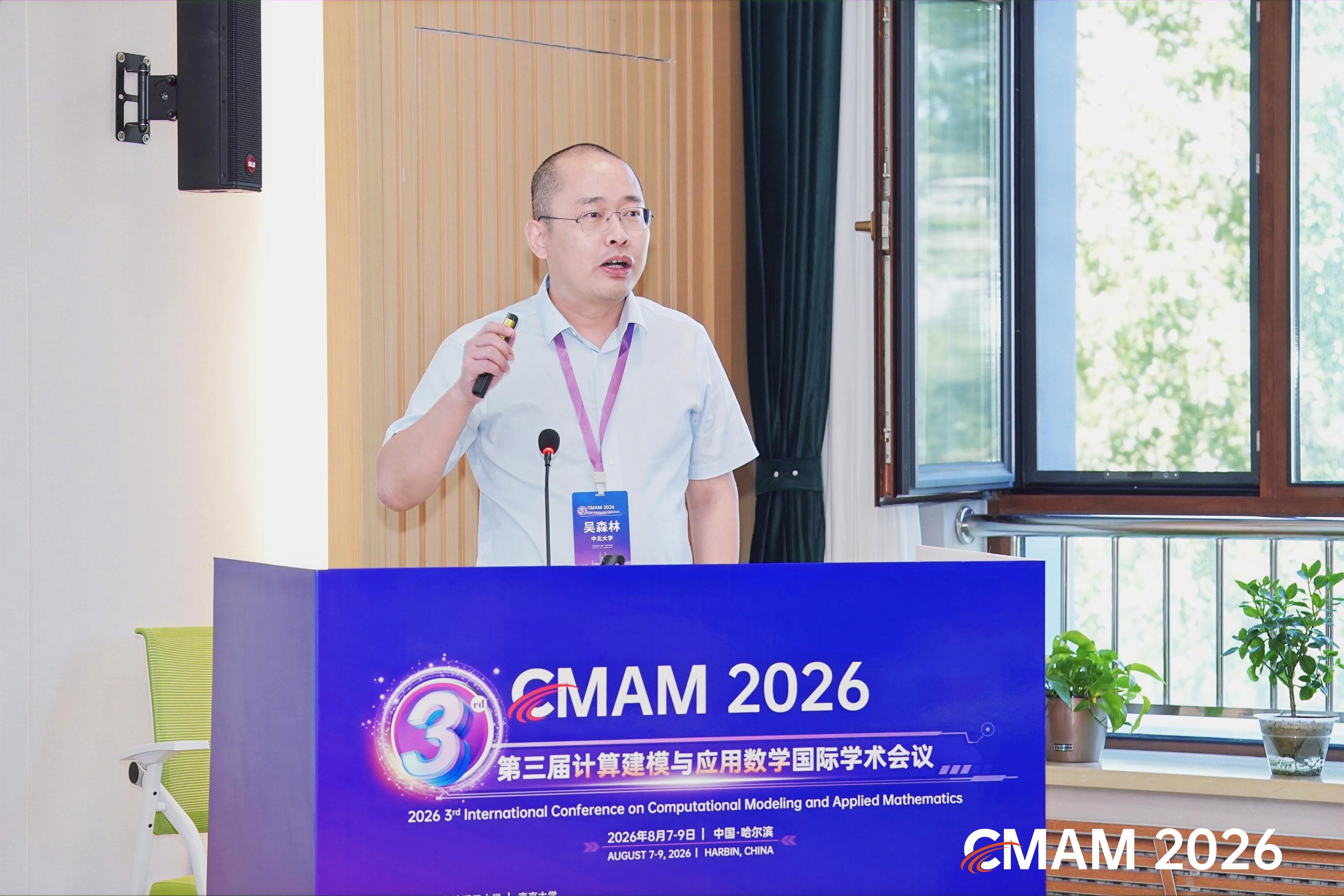 |
| PROF. SENLIN WU · NORTH UNIVERSITY OF CHINA |
| Fifth Keynote Speaker: Prof. Runzhang Xu (Harbin Engineering University) |
Prof. Runzhang Xu is a Professor and Doctoral Supervisor at the School of Mathematical Sciences, Harbin Engineering University, a "Longjiang Scholar" Distinguished Professor, and a standing council member of the Heilongjiang Mathematical Society. Over the past two decades, he has devoted himself to studying the well-posedness of nonlinear partial differential equations using potential well theory, and has published over 110 SCI papers. His talk, entitled "Stability of Damped Wave Equations," presented recent advances in stability research on damped wave equations.
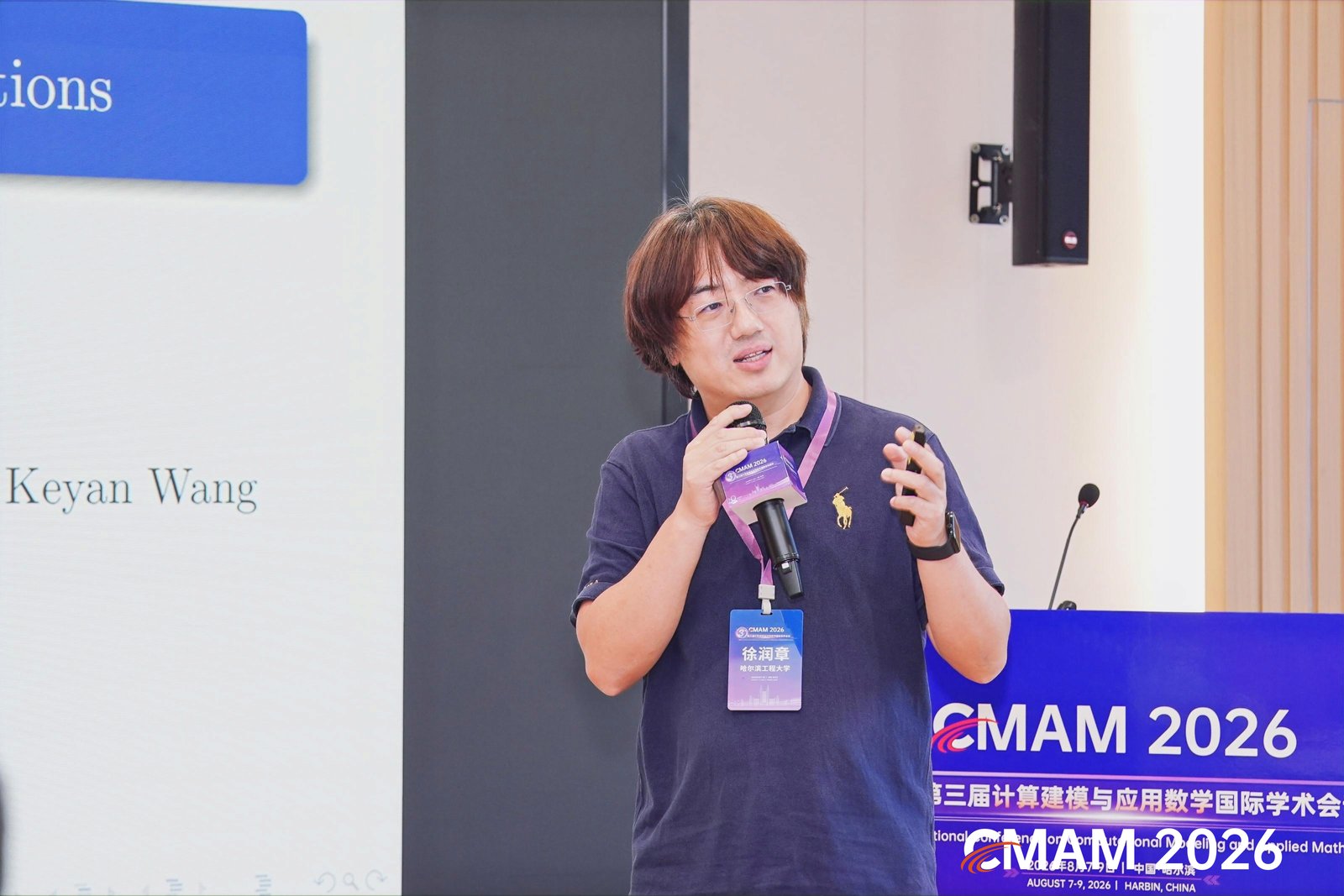 |
| PROF. RUNZHANG XU · HARBIN ENGINEERING UNIVERSITY |
| Sixth Keynote Speaker: Prof. Xianhua Song (Harbin University of Science and Technology) |
Prof. Xianhua Song is a Professor and Doctoral Supervisor at Harbin University of Science and Technology, specializing in theoretical and applied research on quantum computing, image processing, and information security. He has led projects funded by the National Natural Science Foundation of China and the China Postdoctoral Science Foundation. His talk, entitled "Quantum Image Representation and Processing Methods Based on HSI Color Space," introduced novel techniques for quantum image representation and processing based on the HSI color space, providing new technical pathways for quantum computing applications in image processing.
The six keynote presentations were rich in content and forward-looking in perspective, fully demonstrating the vitality and broad prospects of computational modeling and applied mathematics, and sparking lively discussions and interactions among the audience.
 |
| KEYNOTE PRESENTATIONS |
| | Poster Session: Academic Interaction and Inspiring Exchanges | 3 |
During the tea breaks, a poster presentation and judging session was held. Participants voted using sticker ballots to select posters of outstanding academic merit. Two winners were awarded the Excellent Poster Award, recognizing the innovative achievements of young scholars.
 |
| POSTER SESSION |
| | Oral Presentations: The Rising Vigor of Young Researchers | 4 |
In the afternoon, the oral presentation session commenced. Eight young scholars from institutions including Jihua Laboratory, Harbin University of Science and Technology, Hebei Mechanical and Electrical Vocational and Technical College, University of Jinan, National University of Defense Technology, and Dalian Maritime University delivered 10-minute presentations each. The topics covered multi-physics field coupled model analysis, sliding mode control for T-S fuzzy systems, time-series anomaly detection using deep autoencoders, numerical simulation of infectious disease transmission, path-following control of unmanned surface vehicles, spectral conditions in graph theory, mixed variational inequality problems, and encrypted control for T-S fuzzy time-delay systems. The presentations were solid in content and novel in perspective, fully showcasing the academic vitality and innovative potential of young researchers in the field of computational and applied mathematics.
 |
| ORAL PRESENTATIONS |
After rigorous evaluation, the conference presented three categories of awards: Excellent Paper Award, Excellent Oral Presentation Award, and Excellent Poster Award. The winners came from Harbin Institute of Technology (Weihai Campus), East China University of Science and Technology, Beijing University of Technology, Jinan University, and Harbin University of Science and Technology. The applause on site reflected the encouragement and legacy fostered within the academic community.
| 🏆 Excellent Paper |
| 🏆 Excellent Oral |
| 🏆 Excellent Poster |
 |
| AWARDS CEREMONY |
Against the backdrop of accelerating global technological and industrial transformation, computational modeling and applied mathematics serve as a critical bridge connecting mathematical theory and engineering practice, playing an increasingly vital role in driving scientific and technological innovation and industrial upgrading. The successful convening of this conference provided a high-level platform for in-depth exchanges among domestic and international scholars, effectively promoting cross-disciplinary and cross-institutional collaboration in the fields of computational modeling and applied mathematics. The School of Science of Harbin University of Science and Technology will continue to leverage its disciplinary strengths and research platforms, joining hands with colleagues from all sectors to build high-caliber academic brands and contribute wisdom and strength to the theoretical innovation and interdisciplinary integration of computational and applied mathematics in China.
| | “ The academic feast in the summer capital of ice city has come to a perfect close. The 3rd International Conference on Computational Modeling and Applied Mathematics (CMAM 2026) concluded in a vibrant academic atmosphere. The path of scholarship is long and challenging, but with persistent effort, we will reach our goals; with unremitting dedication, the future holds great promise. We look forward to reuniting next year! |
